Peptide Quality Assurance & Pureness Testing Boc Scientific Researches
Peptide Pureness Resolution Innovative Peptides-peptide Drug Exploration
Explore our directory to see verified research study compounds and discover more about our testing and quality assurance process. Even minor pollutants can alter results, minimize reproducibility, or present unwanted variables into a study. Researchers depend upon accurate, confirmed substances to guarantee their findings are both valid and regular.Peptide In Vivo And Artificial Insemination Screening Solutions
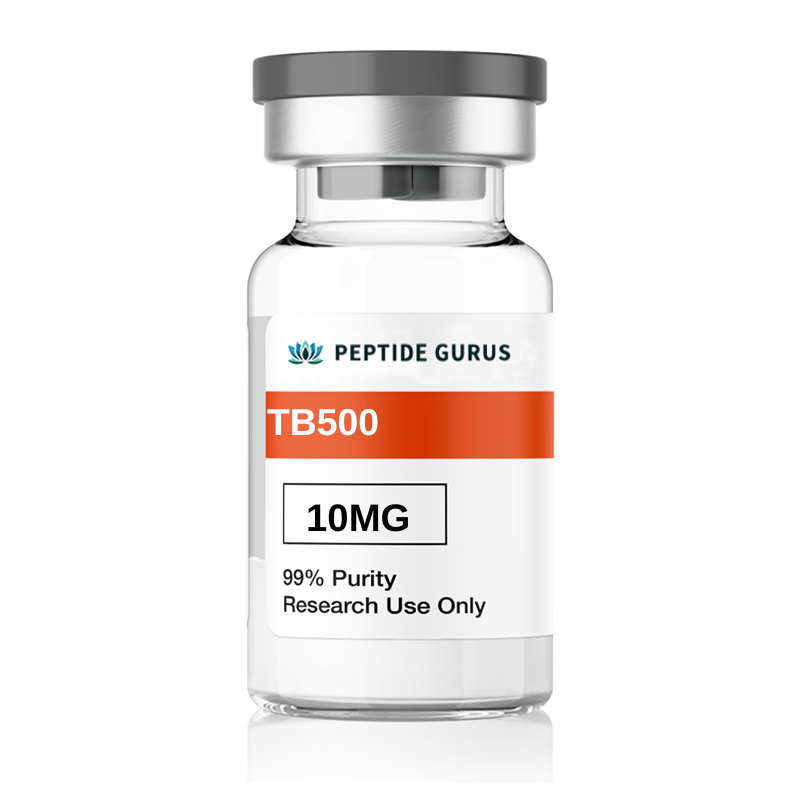
- In addition, methods such as amino acid analysis and HPLC are employed to validate the peptide's identity and purity, ensuring precise characterization for different applications.
- Get in touch with us today to discuss your peptide sequence, sample status, and analytical goals.
- This write-up will certainly damage down exactly how peptide purity is measured, why it stands out from peptide identity, what the common pureness levels (95%, 98%, 99%) signify, and what "research-grade" means in method for peptide reagents.
- Web peptide material describes how much real peptide (by weight) remains in the vial about non-peptide elements like water, counter-ions (e.g., TFA), or buffer salts.
- We support targeted evaluation of relevant residuals based upon the job and example history.
However, achieving ultra-high pureness (state 99%) can be practically challenging and might not always be essential, as we'll review later on. The key is understanding what level of pureness suffices for your demands and how pureness is identified in the first place. For a lot of research objectives, high pureness indicates you can be positive that the vast majority of the molecules in your vial are the appropriate peptide, which helps ensure experimental consistency and reproducibility. Our workflow is created to relocate from example context evaluation to interpretable peptide data with marginal analytical uncertainty. Tasks can vary from one sample identification check to multi-lot comparability, residual evaluation, solubility analysis, or stability-focused logical plans. Hydrophobic peptides, highly fundamental sequences, changed constructs, and carefully relevant analogs can be examined with technique changes matched to their logical risks.
While peptide purity isn't the only aspect, making use of badly identified reagents is an acknowledged factor to irreproducible results. For a 10-residue peptide with 99.5% combining efficiency, you would certainly anticipate about 95% of the final product to be the full-length sequence before filtration. For a 30-residue peptide at the exact same effectiveness, that drops to about 86%. This is why much Visit the website longer peptides are more difficult to create at high pureness and commonly cost even more. Purity is the percent of publications in the delivery that have every page printed correctly, in the ideal order, without any missing out on chapters and no added pages packed in. A 95% pureness suggests that out of every 100 "publications" in your batch, 95 are best duplicates and 5 have some type of mistake.Nanoparticle Physicochemical Building Analysis

The most stringent quality, entailing mindful HPLC purification-- often several rounds-- and extensive QC. Required for measurable studies, structural biology, in vivo study https://dominickflqu027.pinehavenscope.com/posts/peptide-screening-hplc-mass-specification-purity-guide-peak models, and any type of application where also percentages of contamination might influence results. This is the grade where the cost increases most dramatically, because attaining that last 1-- 3% of pureness calls for discarding a substantial portion of the manufactured product. A deletion peptide missing a solitary deposit could still bind to the same receptor, however with different fondness or selectivity. In concentration-response experiments, these impurities can move contours, flatten plateaus, or present biphasic behavior that obscures real task of the target substance. The isoelectric point (pI) is a crucial specification for understanding peptide solubility and habits in various environments.
The Tops
We use GC-MS, ICP-MS, and other methods to find impurities, making sure product security and regulatory conformity. Peptide sequencing is important for recognizing the precise amino acid series of peptides, including alterations like phosphorylation or acetylation. Sequencing enables scientists to comprehend the organic duty of the peptide and its interaction with other molecules, assisting in the style of useful peptides for varied applications. The peptide example is liquified in a compatible solvent and packed right into an autosampler.