Air Conditioner Peptide Testing Laboratories Third-party Peptide Analysis
Understanding Peptide Pureness: What 99%+ Really Means
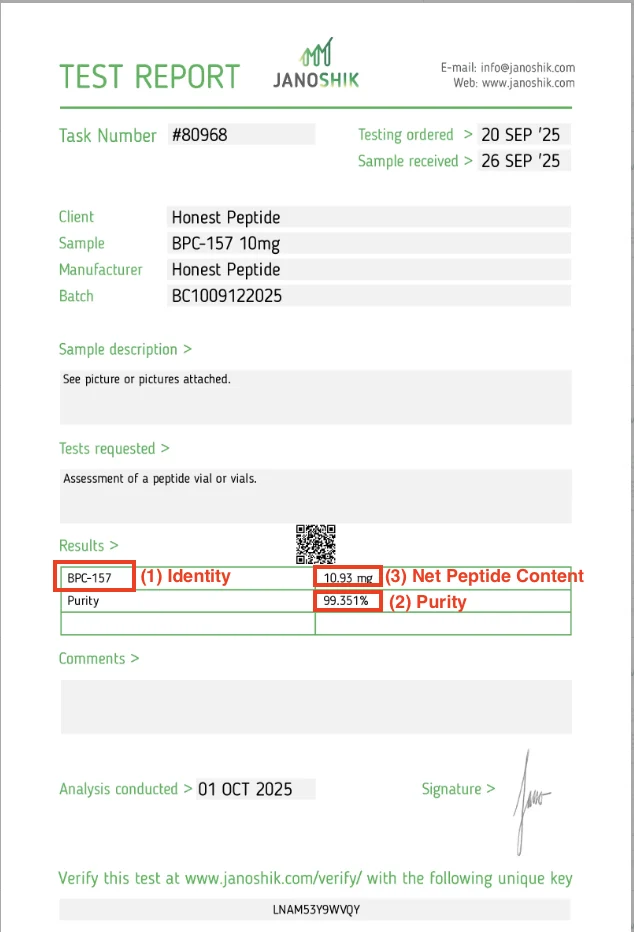
At Maxed Out Substances, every item we supply comes with a clear screening record and clear documentation. Our goal is to sustain researchers with high-purity, verified substances that satisfy the demands of contemporary clinical study-- absolutely nothing even more, nothing much less. Independent, third-party screening plays a necessary duty in guaranteeing neutrality and precision. By utilizing external labs for verification, vendors remove predisposition and support scientific trustworthiness. It's an extra action that offers researchers confidence that each peptide satisfies constant, proven criteria. This quality matches the majority of artificial insemination research applications-- receptor binding assays, enzyme activity research studies, and cell culture experiments.
A useful assay gauging downstream signaling-- or an architectural research using NMR or X-ray crystallography-- demands the highest pureness offered. Crystallographers in particular commonly require ≥ 98% purity due to the fact that even minor pollutants can avoid crystal development or present disorder right into the crystal lattice. As molecules leave the column, they go through a detector-- normally a UV detector set to 214 or 220 nm, wavelengths where the peptide bond soaks up light highly. The detector records how much UV light is absorbed with time, producing a chart called a chromatogram. This overview breaks down what pureness in fact implies in peptide chemistry, how it's measured, what the impurities are, and just how to review the paperwork https://cruzulac868.halcyonledger.com/posts/choosing-the-ideal-collagen-peptide-provider-gelita that proves a peptide is what it claims to be.- High purity is desirable because also small pollutants could interfere with experimental results or interpretations.
- In addition, recurring independent screening sustains conformity in batch launch and quality assurance.
- Our service supports synthetic, customized, cyclic, conjugated, and tough peptide examples with analytical process constructed around the actual task inquiry rather than a taken care of default panel.
- " It does not, on its own, confirm that the main optimal is the desired peptide.
- Each peptide is rigorously kept an eye on during the logical cycle according to strict logical quality control and biosynthetic quality assurance standards.
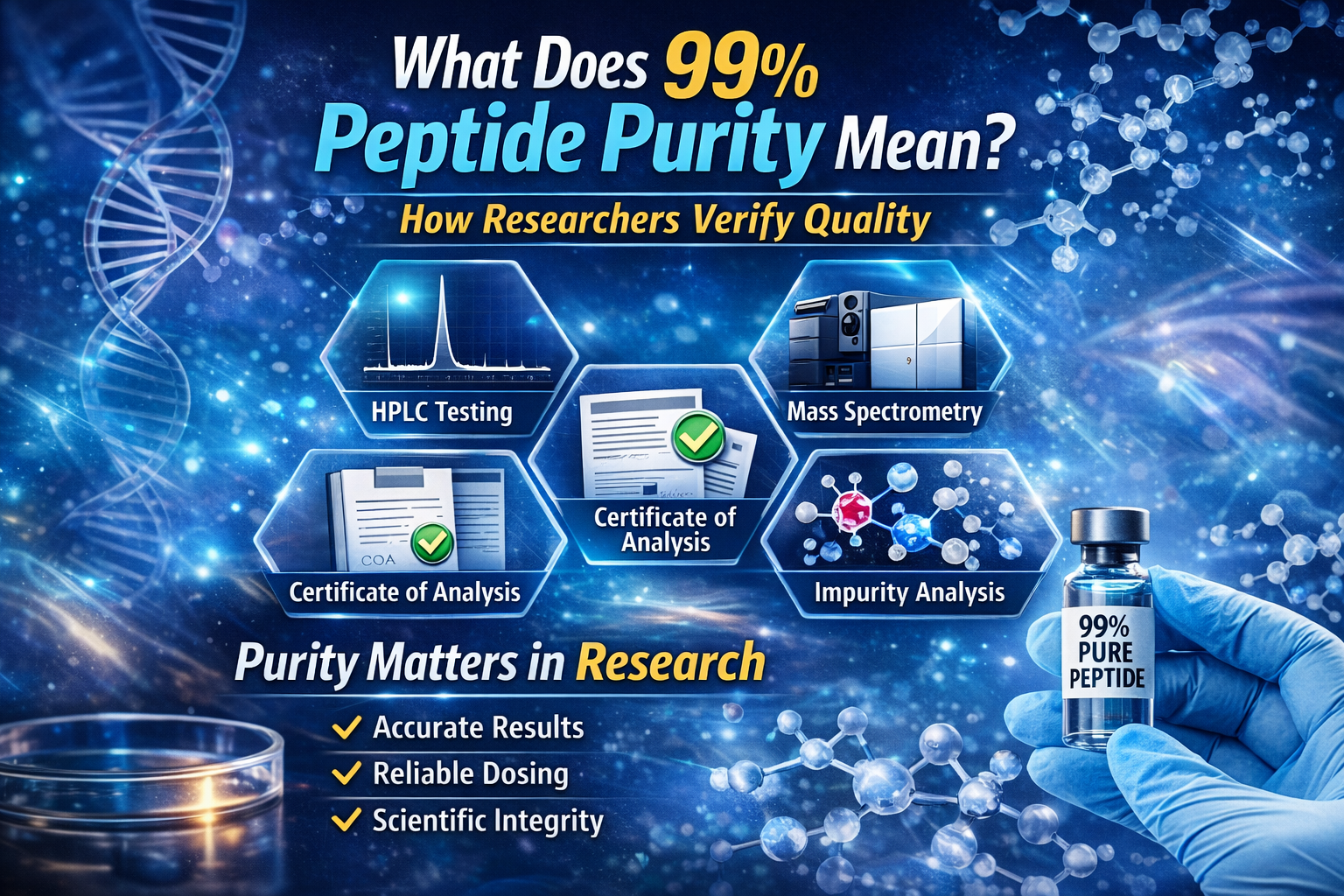
How Does Laboratory Recognition Secure Against Peptide Fraudulence?
Significantly, this purity number is usually figured out after purification (e.g. by HPLC) and focuses on peptide impurities-- it doesn't count residual water, salts, or counter-ions in the dried out peptide powder. Simply put, the pureness percent has to do with the make-up of peptide species in the example, not the weight payment of water or salts. A peptide can be 98% pure (indicating extremely couple of peptide contaminations) yet still include some water or trifluoroacetate salt; those non-peptide components would be mirrored in the internet peptide web content as opposed to the purity percent. At Creative Peptides, we offer custom-made peptide chemical and physical evaluations for study groups that require reputable data on peptide identification, pureness, structure, option actions, and sample high quality. Our solution supports synthetic, modified, cyclic, conjugated, and hard peptide examples with analytical operations built around the actual task inquiry as opposed to a dealt with default panel.What Hplc Can Not Show Alone
Along with HPLC and MS, specialized labs may utilize orthogonal strategies for included accuracy. As an example, capillary electrophoresis can be made use of to separate extremely hydrophilic peptides or to double-check results, and MALDI-TOF mass spectrometry can assist in mapping larger or customized peptides. Lots of peptide manufacturers or vendors will offer a COA (Certification of Analysis), for instance our bpc 157 tb 500 blend, that includes the purity percent by HPLC and identity confirmation by MS for each set. Top-tier laboratories often report peptide purity well above 95%, often ≥ 98-99%, by using cutting edge HPLC and MS evaluations. They additionally evaluate both resources and ended up peptide vials, which helps capture any impurities, destruction items, or formulation inconsistencies.The injector introduces a specific volume of sample right into the mobile-phase stream. Regular injection quantity matters because overwhelming the column can expand heights, misshape purity quotes, or hide close-by impurities. A strong peptide testing process utilizes techniques that answer corresponding inquiries. The table below is the functional way to consider typical examinations when reading a peptide COA.
HPLC measures chromatographic purity by dividing the target peptide from relevant pollutants and determining main-peak location percent. Mass spectrometry confirms molecular identity by inspecting whether the gauged mass matches the anticipated peptide mass. For research-grade peptide qualification, HPLC and LC-MS/ESI-MS solution various questions and should read with each other. BOC Sciences additionally offers extensive in vitro (cell systems) and in vivo (pet systems) screening services Quality Control to help clients totally comprehend peptide formula efficiency in various environments. In vitro tests evaluate peptide cytotoxicity, cell uptake, anti-inflammatory activity, and much more, providing fundamental data support for peptide applications in clinical aesthetic appeals and biomedical fields.
For groups that require deeper architectural evaluation, the job can also be lined up with peptide series analysis and wider characterization support. Amino acid analysis or other measurable strategies can support absolute material. Chiral approaches can deal with enantiomeric pureness where stereochemistry is a problem. Residual-solvent or water-content tests can matter in production or security contexts. Preserving a high level of purity is vital since pollutants can influence bioassays or responses. For example, trimmed peptides or chemically customized side-products could bind to targets or create negative effects that amaze your outcomes. Specifically modified peptides or cyclic peptide series are challenging to confirm, which influences quality assurance. We combine LC-MS/MS and chemical food digestion analysis to specifically confirm the sequence and adjustment sites of non-natural modified peptides. Residual natural solvents, metal ions, or spin-offs from synthesis might create poisonous negative effects.